
Why We Bought Into Fiber Homes
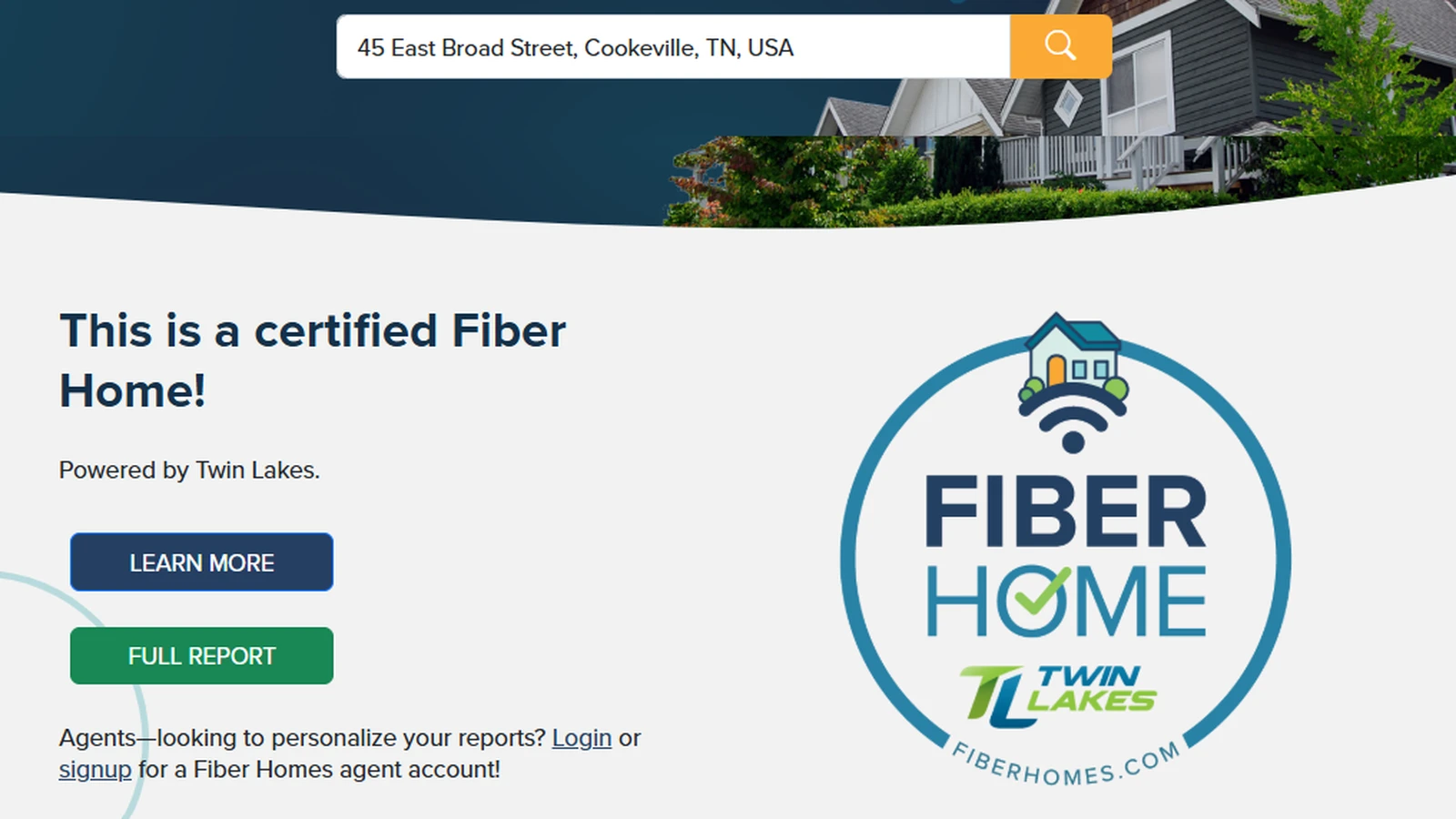
Last year we took on some backend engineering work for Fiber Homes. On paper it was a normal enough engagement: their systems needed attention, and systems are what we do. The interesting part was not the work. It was what we kept finding while we did it.
Earlier this year we bought a piece of the company. Broadband Insights is now an owner of Fiber Homes Holdings.
What Is Actually In There
Fiber Homes gets described as a real estate engagement platform, which is accurate and undersells it considerably. Underneath it is a large GIS database: millions of serviceable addresses, the providers who serve each one, the technology they serve it with, and the packages and pricing behind it.
That combination is rarer than it sounds. Plenty of organizations have address data. Plenty have provider footprints. Having both joined at the individual address, across a couple of hundred providers and most of a country, is a different asset. So is having it stay current, which happens here for a distinctly low-tech reason: realtors and homebuyers are hitting it all day, every day.
That database is what answers the question when somebody pulls up a listing and wants to know what internet they can get, and in a lot of markets the answer is auto-populated straight into the listing. So picture a Tuesday night. A family is looking at a house, the listing already tells them fiber is available, and they never pick up the phone to ask anyone. The provider never learns that a household on that street was shopping. Multiply that by tens of millions of lookups a year and you have a demand signal, at the individual address, that almost nobody in this industry is reading.
Why We Were Never Going to Build It
We spend our working lives on one fact: an address is the thing every part of a broadband business has in common. Planning has it. Engineering and construction have it. Operations, sales, marketing and finance all have it, formatted differently in every case and rarely agreeing with each other. A good share of the integration work we do comes down to making those versions line up. It is the same argument we make about the serving area: a number has to sit at a unit small enough to act on, and an address is about as small as this industry gets.
So a database already keyed on the address, across providers rather than inside one, reads to us like the join everybody needs and nobody has.
Our own platform aggregates an operator’s tech stack into a single view, and it is by construction one operator’s view of one operator’s world. Every customer we bring on makes it deeper; none of them make it wider. Fiber Homes is the other shape entirely: one database, most of the providers in it, organized by address instead of by customer. We were never going to build that from where we were standing, and the two are worth more pointed at each other than either is alone.
Why We Wanted a Share of It
There was a simpler version of this. We were already doing the engineering, the arrangement worked, and it could have carried on that way for years.
What changed it was how much of this only pays off if somebody sticks around for it. A vendor ships the feature and moves on. An owner is still there when a decision made in year one turns out to be wrong in year three, and still there to learn whether anyone uses the thing at all.
There is a plainer reason underneath that. Once you have spent a year inside a database like this one, you would rather own a piece of it than rent access to it.
Where the Platform Is Going
None of what follows is a vision we turned up with. It was already on the product roadmap, and our job now is to make it happen.
Two enhancements are close. Market Edge will put competitive position on the map address by address: what is actually available at each one, and who is already selling it. That replaces the county average most providers are planning against today, a number that describes no household in it. Fiberlytix, a partnership with 7Sigma, goes the other direction, layering demographics, propensity scoring and a provider’s own subscriber data onto the same footprint.
At Broadband Insights we are building a fair amount of what sits underneath Market Edge. The platform’s own provider data comes first, with the FCC Broadband Data Collection as the fallback behind it. That is genuinely good data carrying some sharp edges, and those are worth a post of their own once it is in front of people.
If you are a provider trying to work out where your next hundred customers actually are, that is the problem all of this points at. Reach out to us, or go take a look at what Fiber Homes is doing!