Your deployment cost per home arrives years after the money does
A fiber build is underwritten on a cost per home agreed before anyone breaks ground. Construction then runs for years, invoices arrive in arrears, and reconciliation can run longer still.
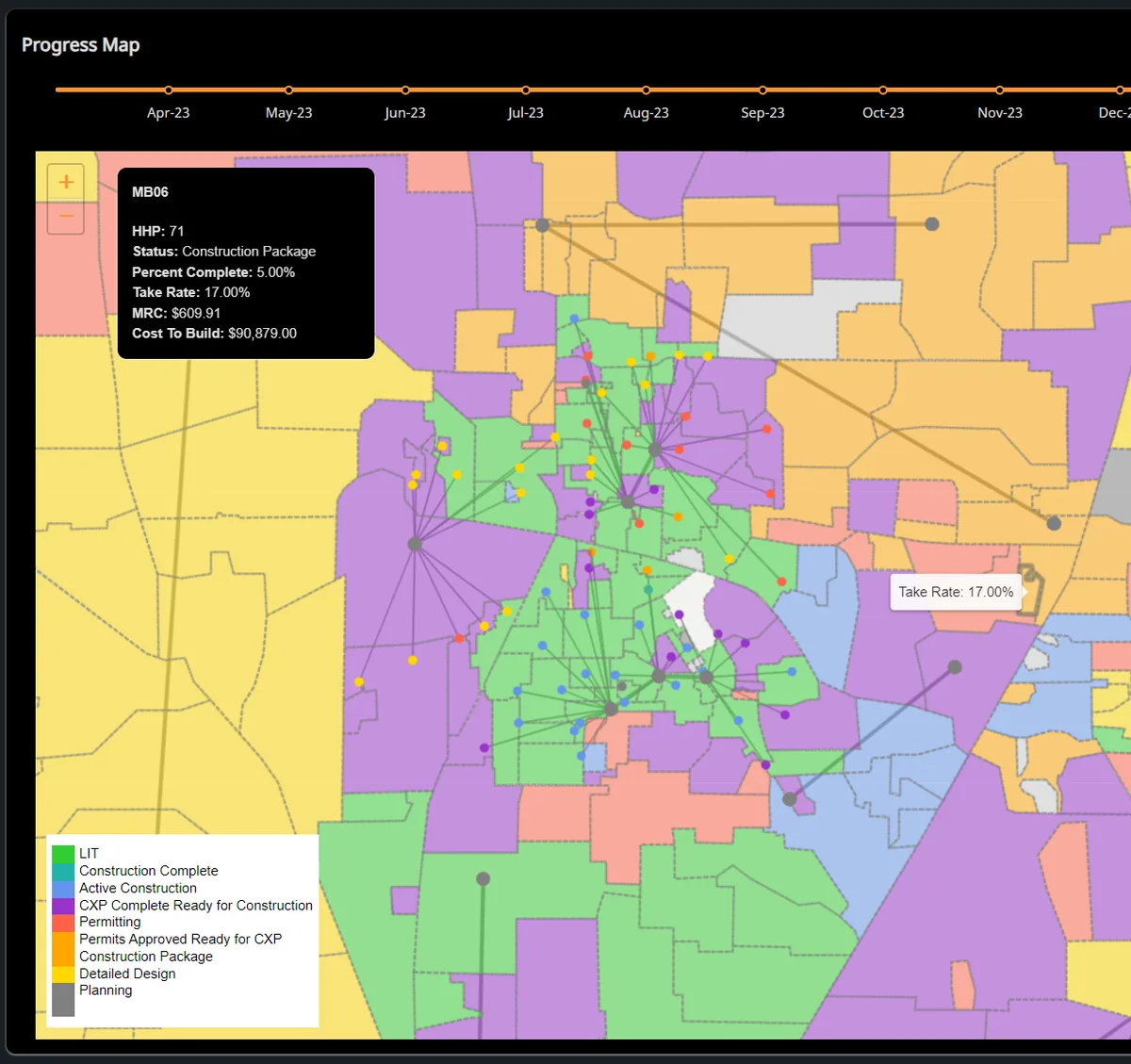
By the time it settles, the money is spent and the decisions it should have informed are behind you. We build the running number instead, from whatever the work is recorded in.
Send us a month of construction data in any shape and we will show you the cost per home passed it implies.
We work from whatever holds the build
Cost per home, cost per mile, and the density that explains both
A broadband finance team judges a fiber build on three numbers. Cost per home passed is what it cost to reach each home. Cost per mile is what the plant costs. Homes per mile is the density that explains why the first two landed where they did, and why one market cannot be compared to another without it.
We roll all three by project, by serving area, by market and overall, tracking the history so the trend is visible. A cost per home passed climbing quarter on quarter is a different problem from one that is merely higher than another market.
Density moves before cost does, because density is set by the design rather than by what has been invoiced so far. It is the earliest warning a fiber build gives you.
The number that decides the build is the one you get last
The figure telling an operator whether a fiber build still works is the slowest one in the whole process, and capital intensity is what makes that delay expensive. A build can run from roughly a thousand dollars a home to several times that, and the case it was funded on is usually written near the bottom of that spread. Drifting toward the top is survivable if an operator sees it in month four, and not if they see it in year three.
Homes earned, so a build in progress can still be measured
A fiber project can be worked for a year before anything is finalised or lit. Measured against finished homes only, cost per home passed is meaningless for that whole period, because the spend is real and the denominator is still near zero.
Homes earned is how we handle it. Progress on a serving area is recognised as it is built rather than only at completion, so cost per home stays interpretable while construction is still under way.
Homes earned is our own construct rather than an industry standard. It exists because the alternative is waiting until a project closes to learn what it cost.
Down to the material, and to the crew
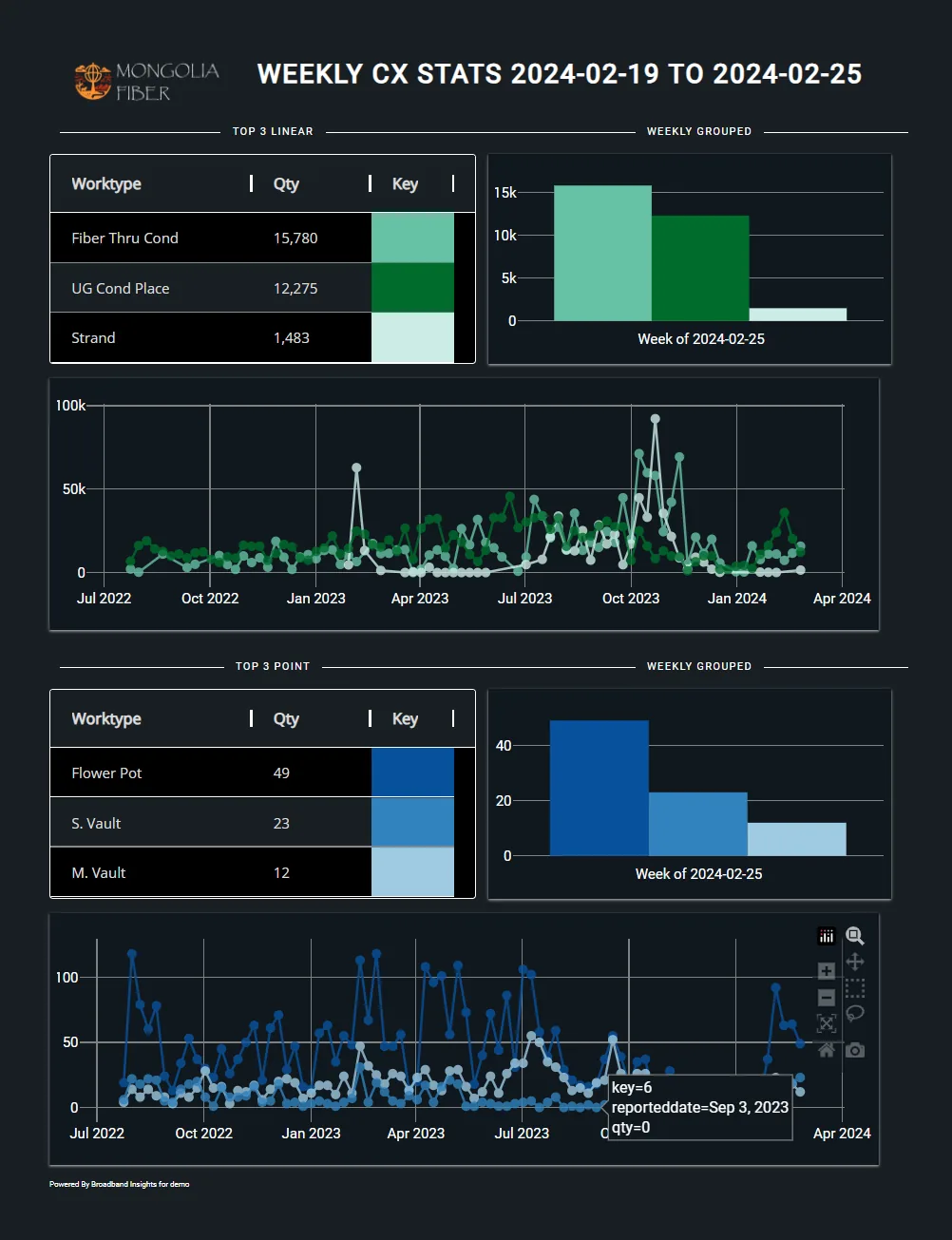
An average cost per home passed says a fiber build has a problem. It does not say that vaults are the line that moved, or that splicing is running above estimate while conduit is on plan. We break construction spend down by material and by work type so the expensive item is named rather than inferred.
The same construction history covers who did the work. Production by crew and by contractor is the other half of any answer to why a market came in where it did.